From the class Integrative Seminar 2 · Learning Portfolio post, March 13, 2020
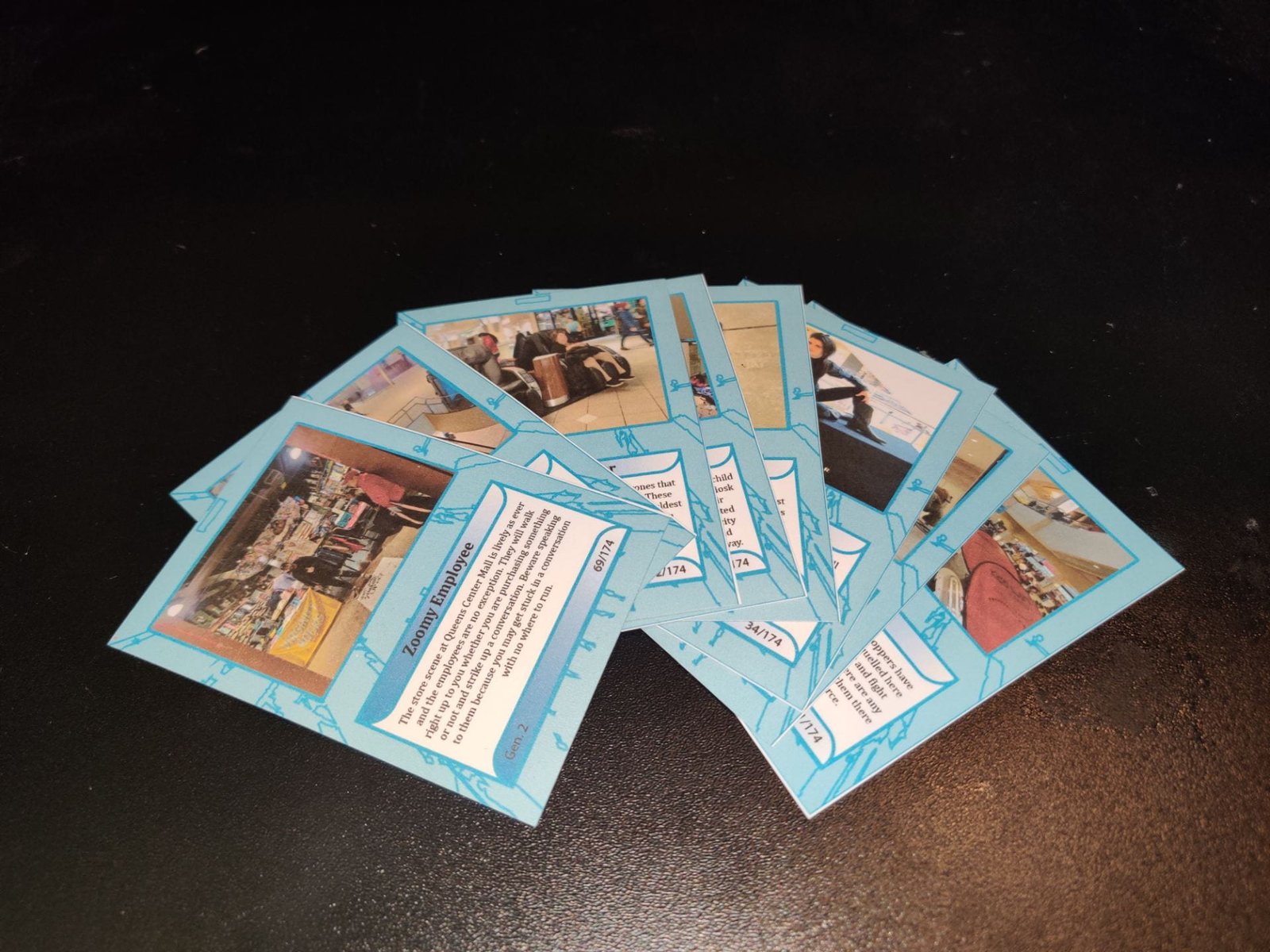
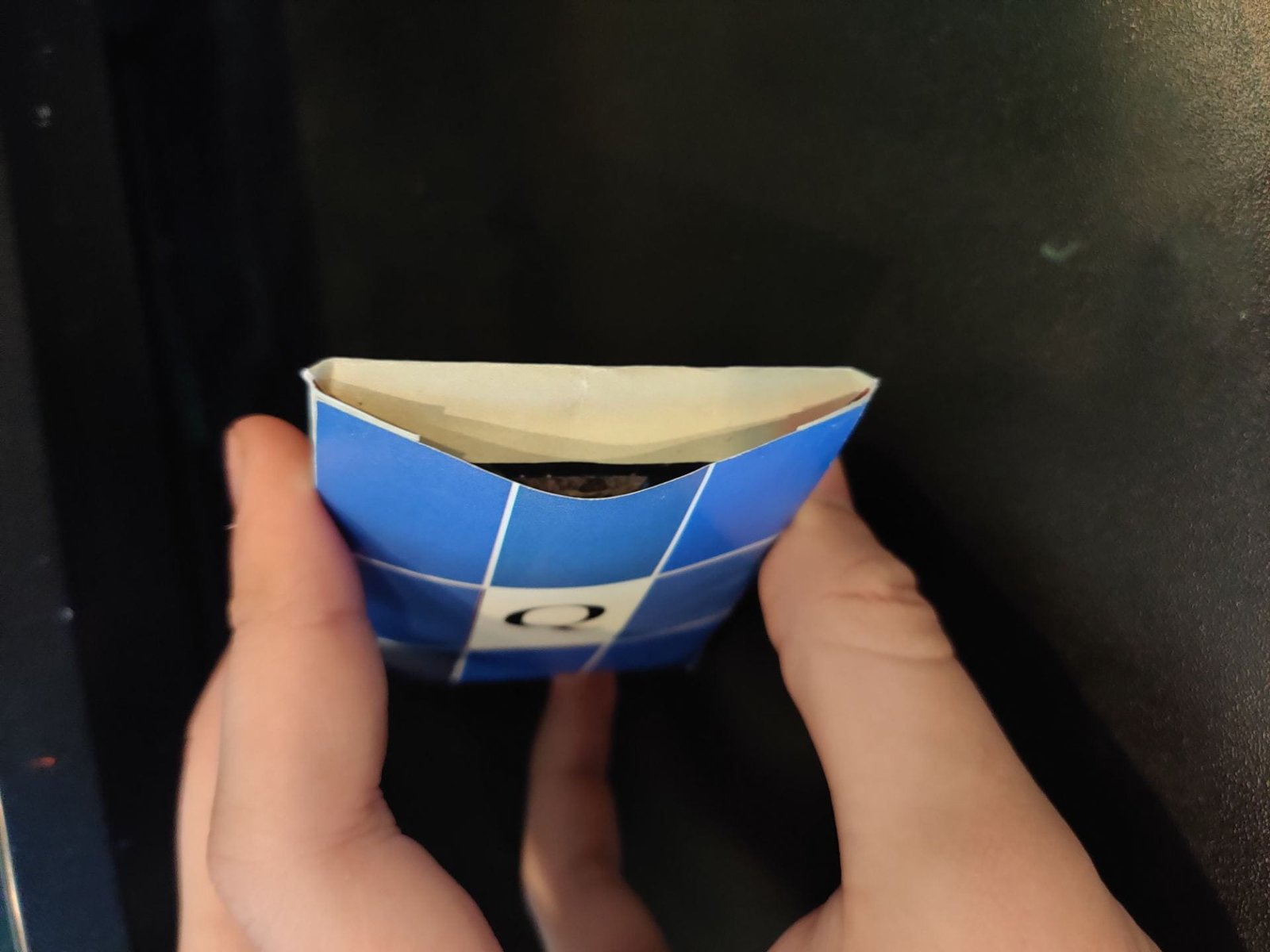
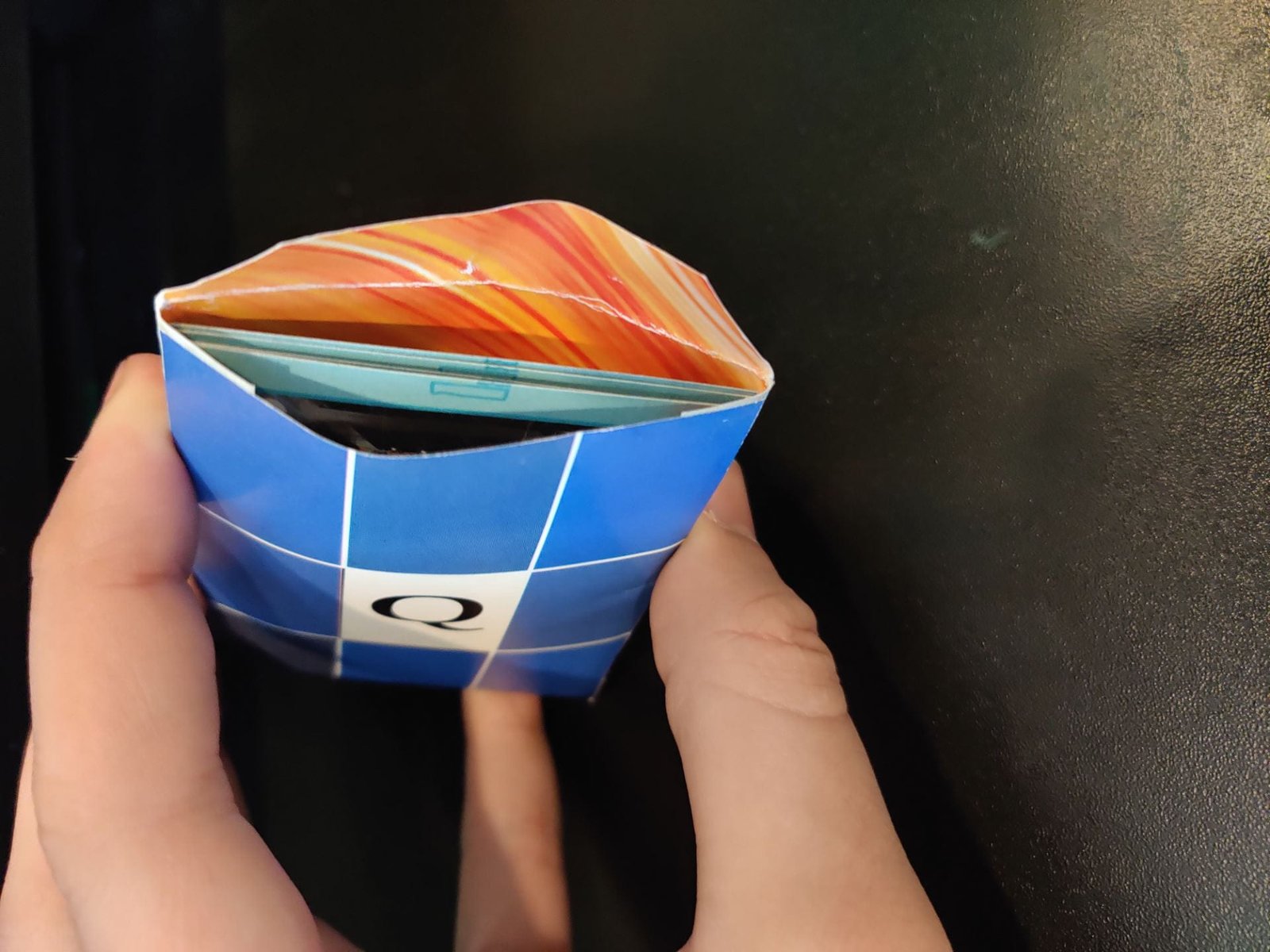
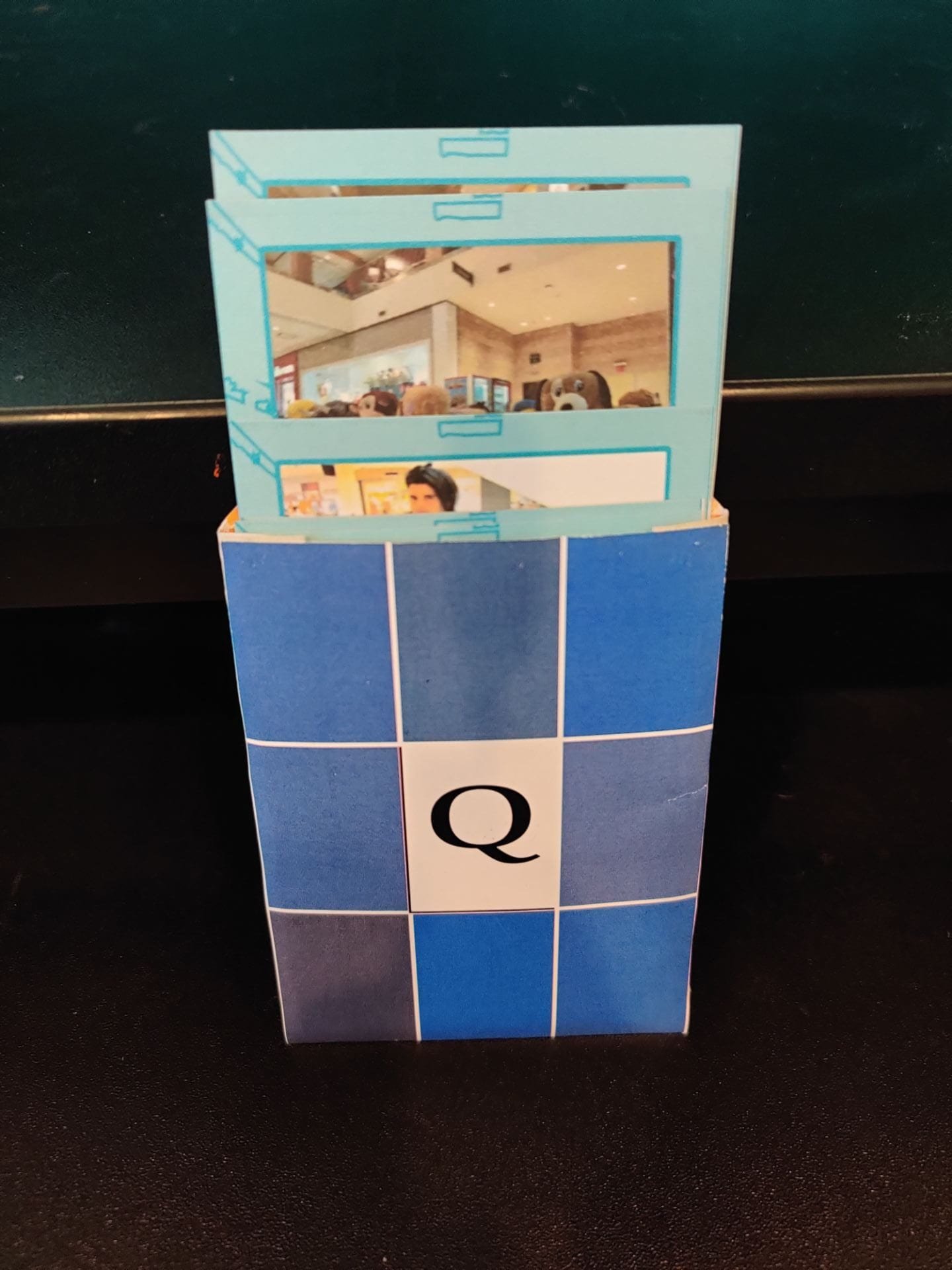
The defining form of visual culture from my childhood is and has been trading card games. From Pokemon to YuGiOh to Bakugon To Magic The Gathering. My generation grew up on trading cards. We would give them out as party favors, spend countless nights sorting and organizing them and trading them in the schoolyards. Personally, my grandma would take me to the 99c store every Friday after school on our way home and buy me a pack of pokemon cards on our way home. This is why I chose to use the trading card format to represent the equally significant place for my childhood that is Queens Center Mall.
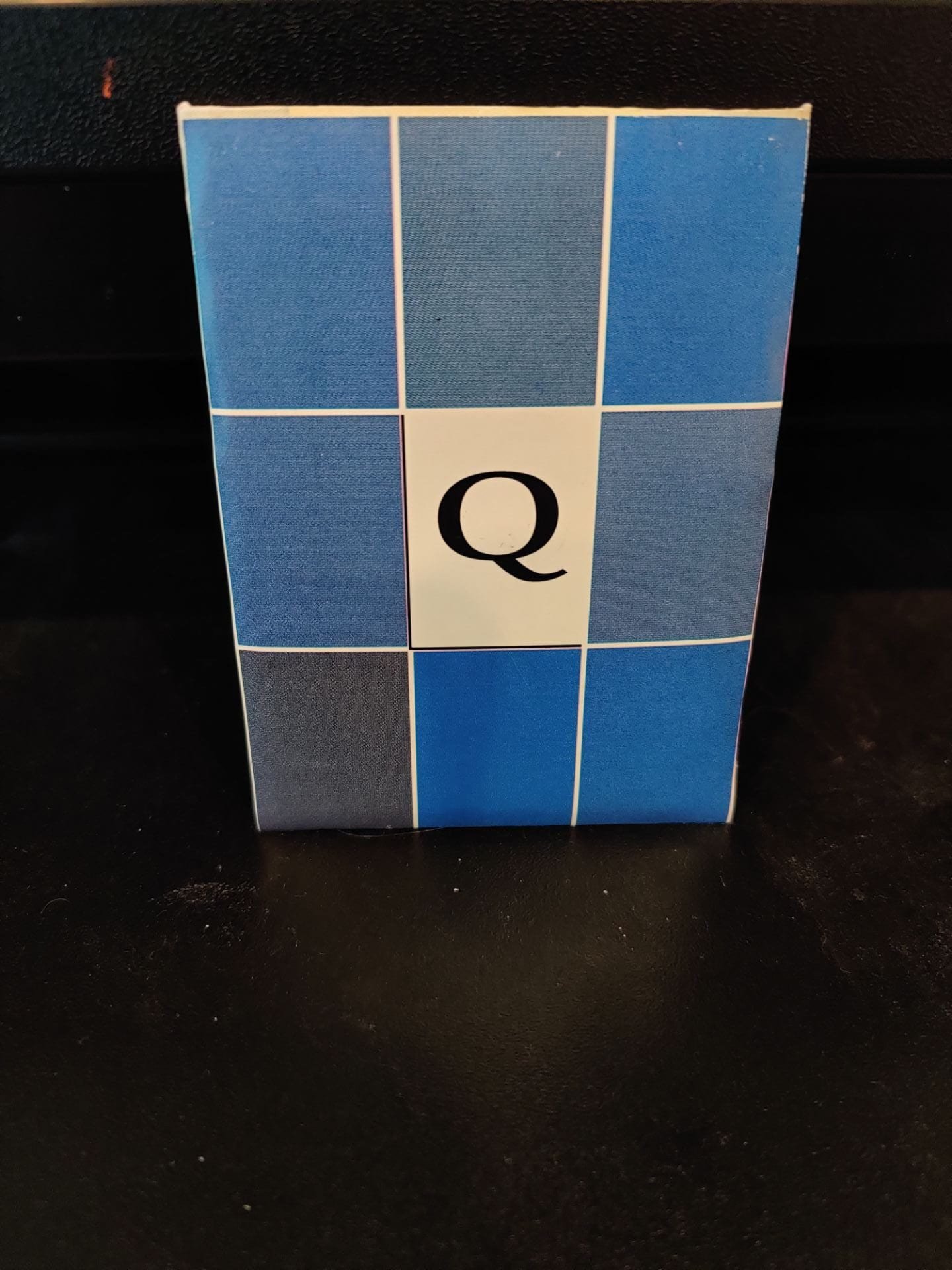
For my design process, I did some investigation on what kind of paper trading cards are printed on and their sizes. I decided I could research all day long but the papers on my screen provided no tactile information to me so I went to City Papery instead. Once there I was looking for a large sheet of cover stock paper to print several cards at once and then cut them out. The paper I eventually settled on was 3.5×5 in cover paper after I found out that the design center printers could print that small. My thought process was that I would be able to print 2 cards on each sheet measuring 2.5×3.5 inches each. Once at the design center I realized the printers require borders and can not print borderless so I would either have to print smaller cards or they would be cut off. I instead decided to print one card per sheet of paper at the originally intended size. Lastly, to make the packaging I used a glossy 11×17 sheet of paper to mimic the plastic disposable foil packaging that usually wraps trading cards.
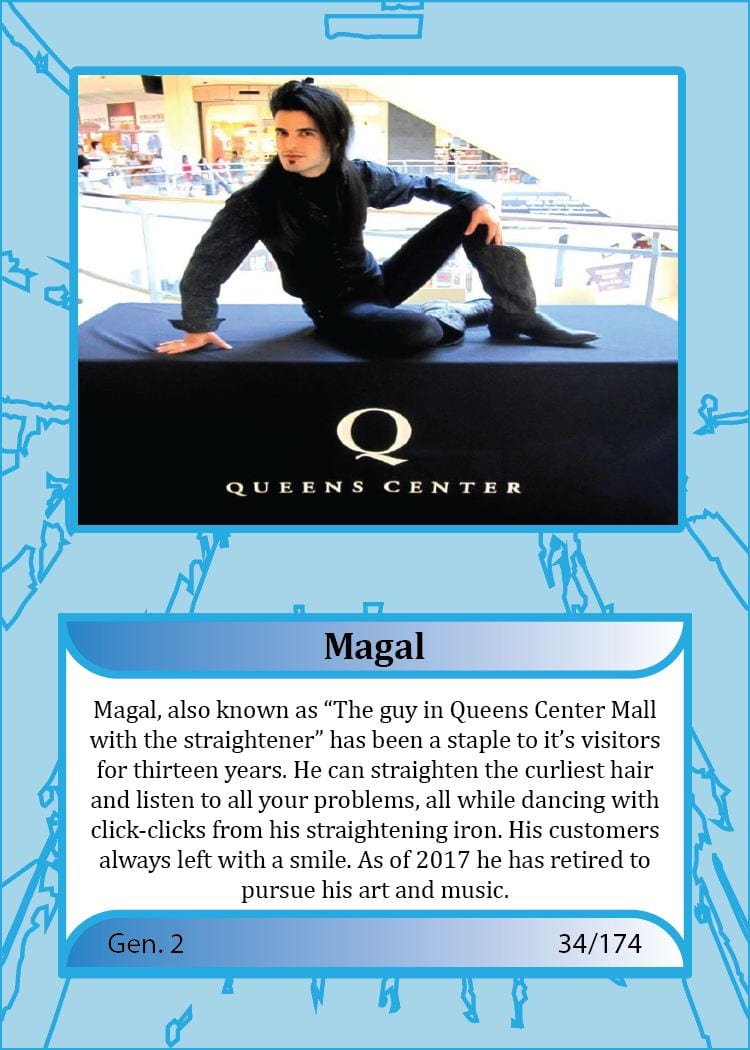
Post critique my main comments were that I had 2 spelling mistakes, to use a bleed while printing and to have reconsidered my paper choice for my packaging. After leaving class and discussing the critique with a peer I decided that I want to leave the spelling mistakes even though it may seem unprofessional. My reasoning for leaving the spelling mistakes is because as I collected cards as a kid there sometimes would be cards with mistakes like that and were called misprints, because of these errors they were considered very rare. Next time I do a printing project I will definitely use a bleed and also would consider using colored paper to get rid of the white on the very edge of the cards too. As for the packaging I feel like I could take inspiration from the new cardboard booster packs of trading cards that are now produced and have no internal foil packaging.
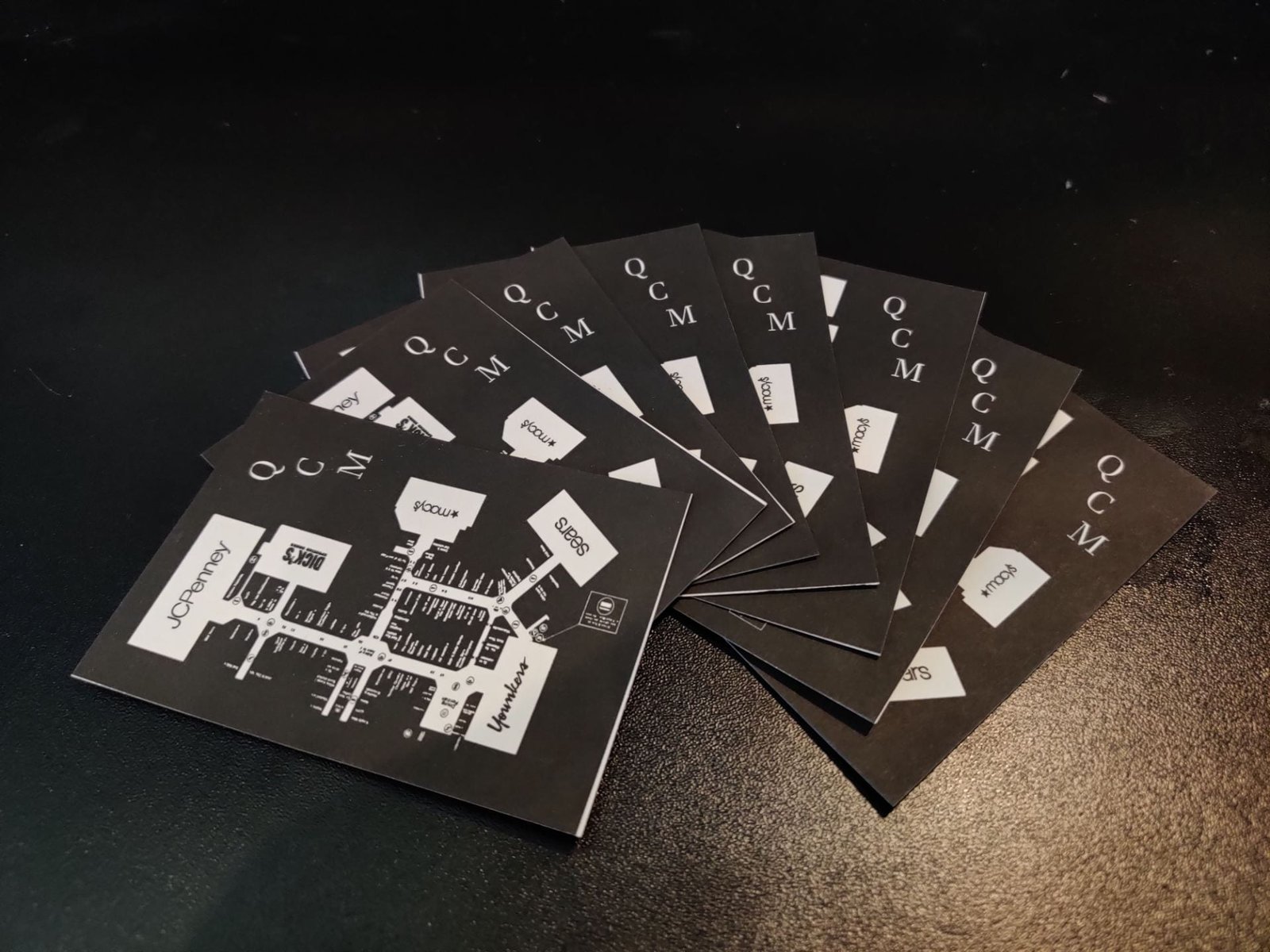
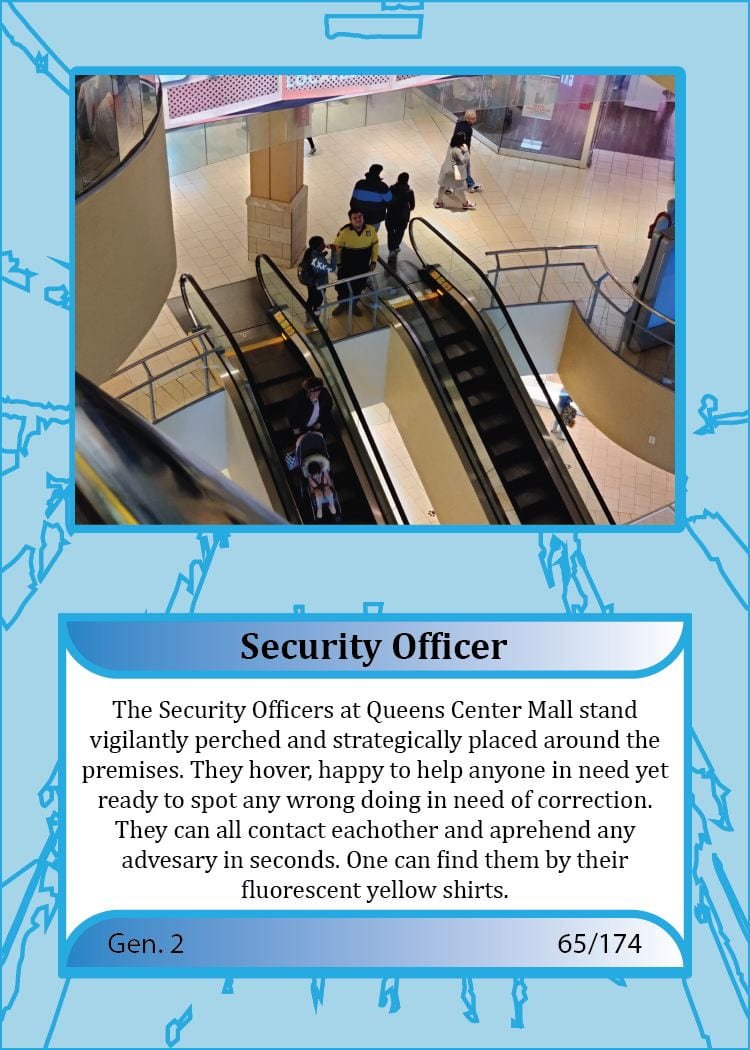
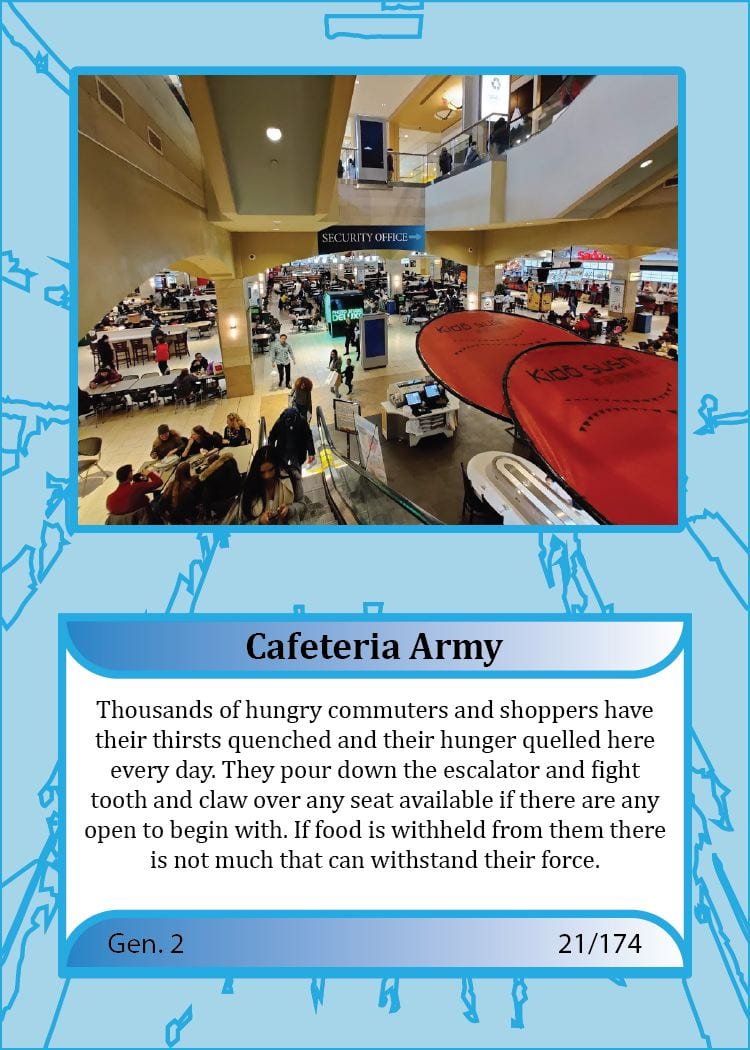
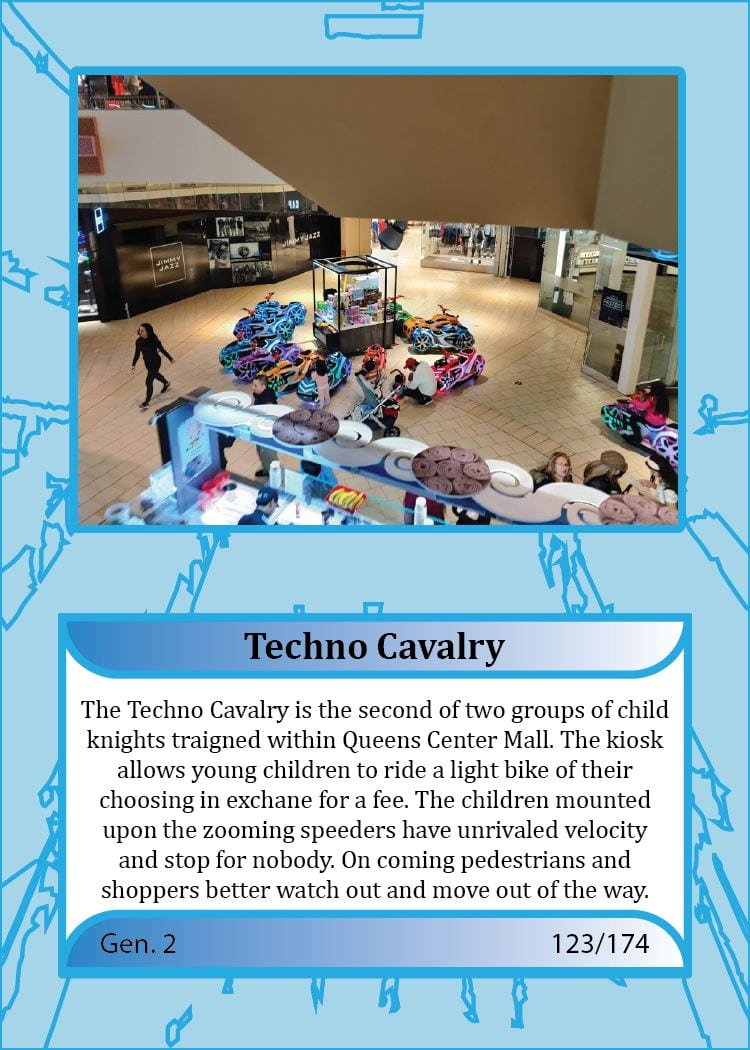
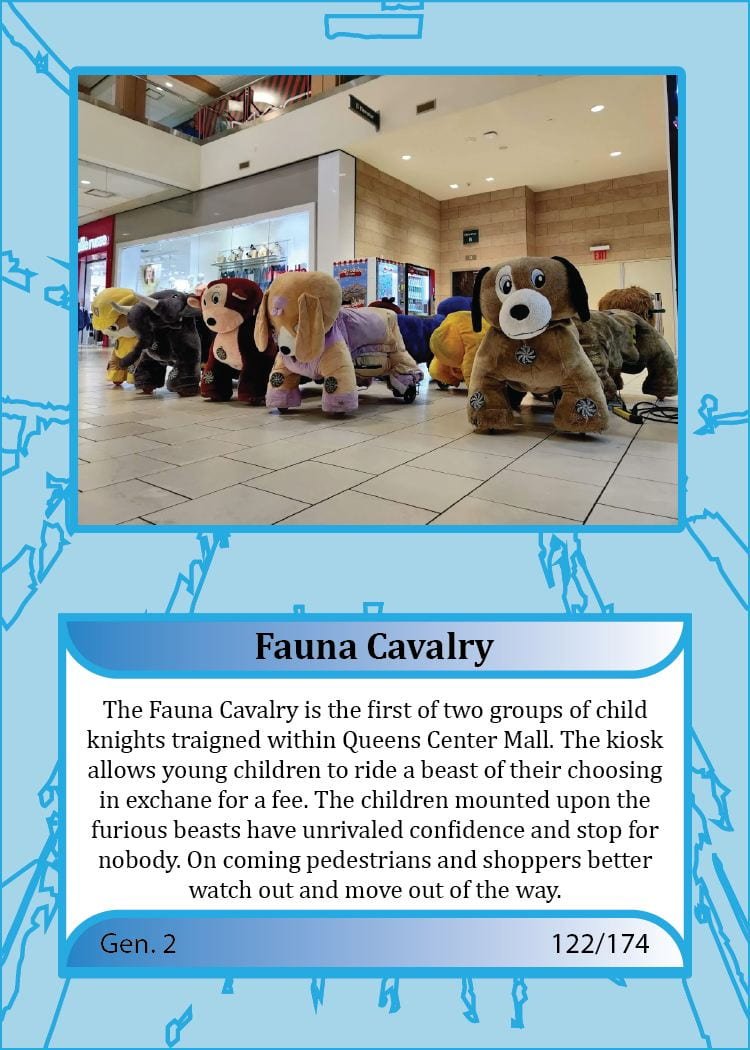
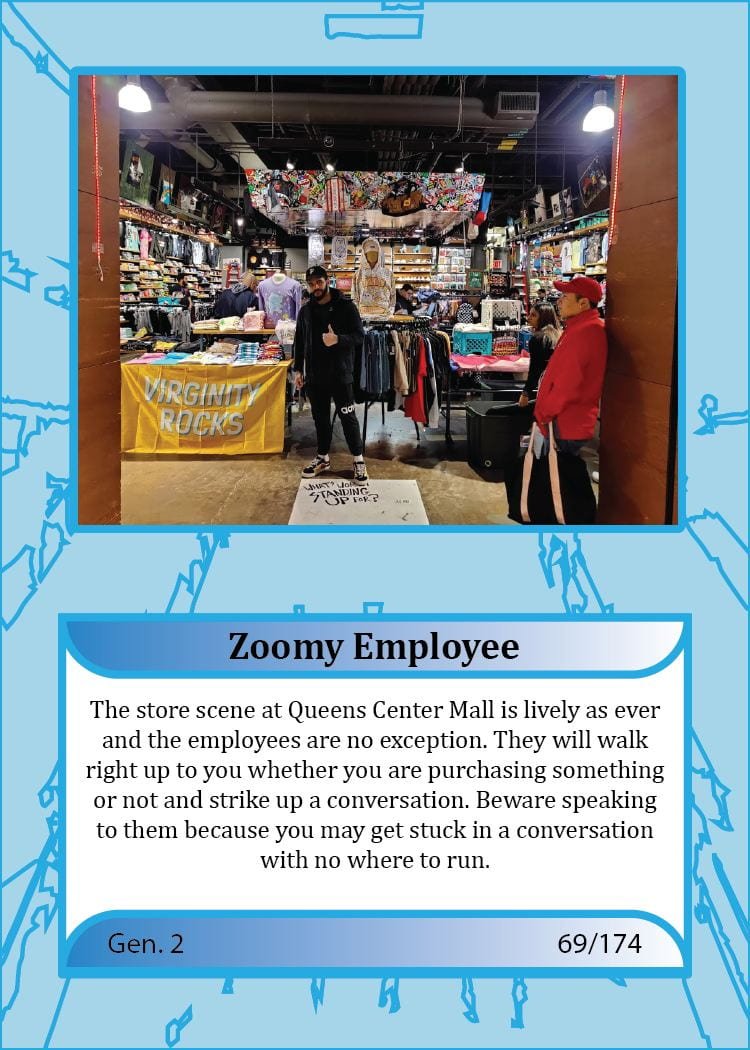
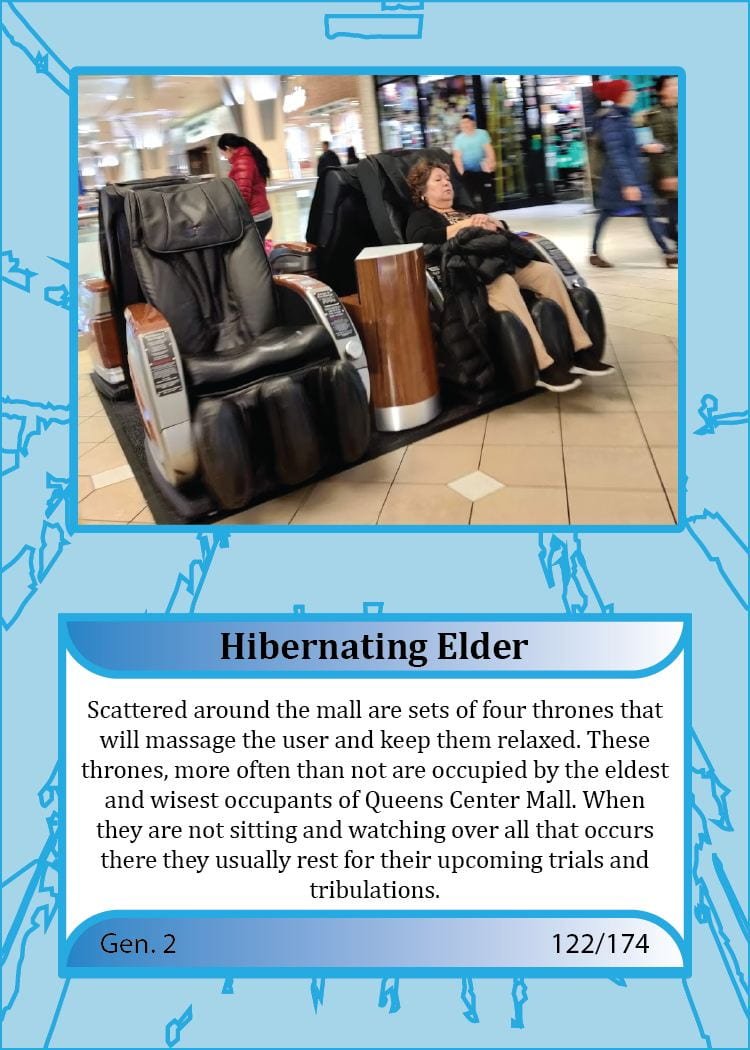
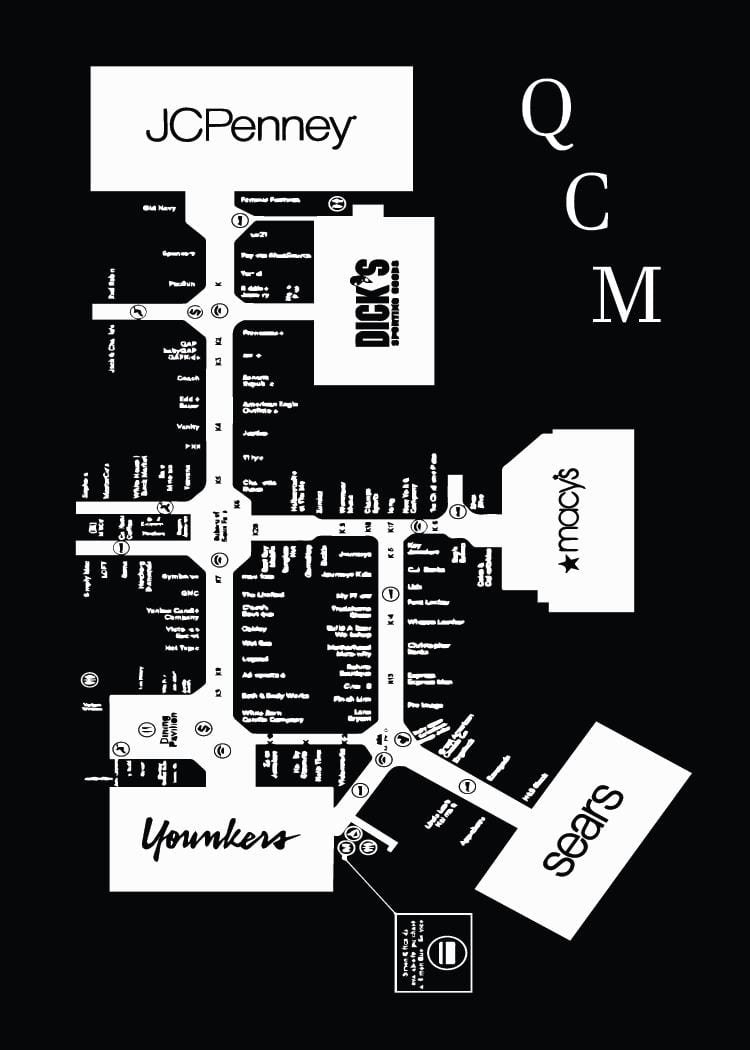
In terms of the design of the cards, they are roughly the same size as pokemon cards but took more influence from the size of the paper as mentioned beforehand. I wanted to make 3 packs originally one for the past, present, and future. Due to time constraints, however, I was only able to make one pack. I did want to reference the past and future however in the one pack I did make for the present. To do this I did a couple of things such as writing Gen. 2 on the bottom left corner of every card, implying that different cards came before and will come after. The backs of the cards also have a dated map of QCM as if the backs were designed with the first generation and wanted to maintain branding. I also wanted to imply this pack only contained a few cards from this printing so each card has a number on the bottom right. The background on the faces of the cards consists of the outlines of a picture of escalators at the mall. The theme of the cards largely focuses on groups of people I primarily saw around the mall.
Essay
Queens Center Mall has always been the center of Queens to me, even if it technically isn’t. Throughout middle school, Queens Center Mall was just far enough from my house to where it felt like I was independent when I went by myself but still was not too far from home. In high school, Queens Center Mall became a daily point of physical intersection for me. I would wait there every afternoon where my two bus routes connected. This central point of community and relationship between commuting and commerce is not only reflected in my life but thousands of others as they pass through Queens Center Mall every day.
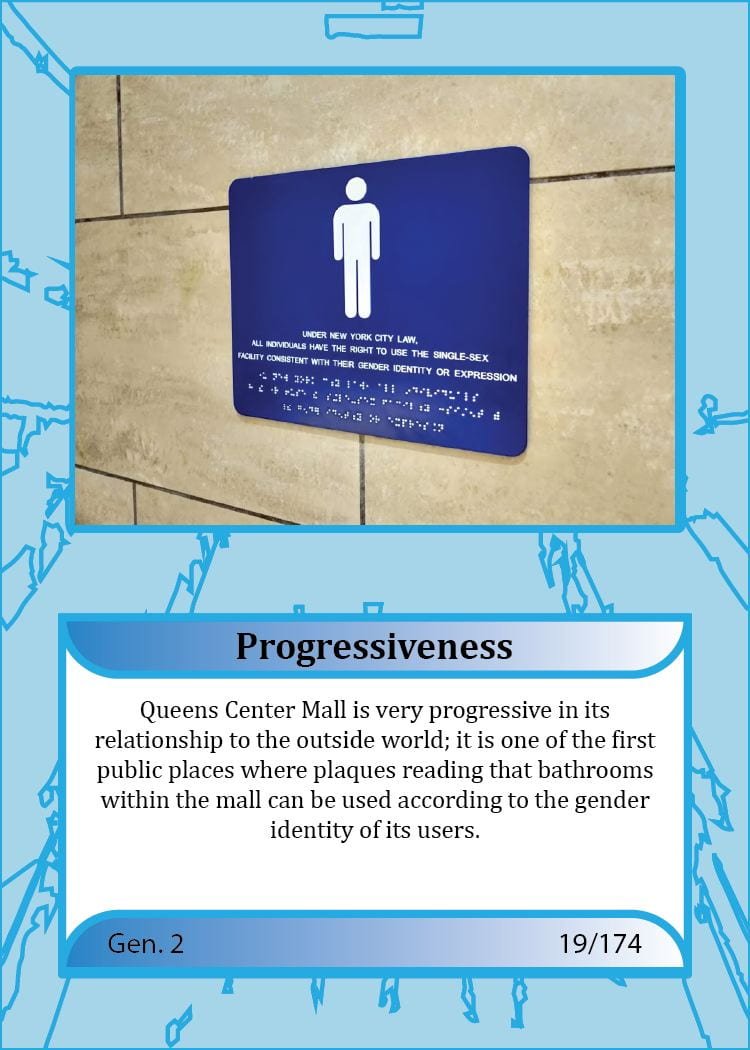
Today Queens Center Mall has grown to be a goliath. It is the largest mall in Queens, measuring in just under a million square feet and its return in sales per square foot is triple the national average. Every day you can see families shopping, teenagers hanging out after school, couples going on dates and shopkeepers all beckoning them into their respective stores. The New York City borough of Queens is the most diverse place in the world and that fact is most definitely represented in its biggest mall. Despite being a mall, it is very progressive in its relationship to the outside world; it is the first public place where I encountered a plaque reading that bathrooms within the mall can be used according to gender identity. However, predating Queens Center Mall is the spirit of centrality that has been present in its location for decades.
In 1949, where Queens Center Mall stands today, once stood Fairyland, an amusement park. The two men who put it there, Bernard Berkley and his manager Al McKee, realized the paramount importance of its location, specifically citing the fact that it could be easily reached by foot, car, bus or subway. The two of them also built parking lots which were able to accommodate up to 5,000 cars. This was instrumental to their success and led to up to 15,000 people visiting at a time. The park started with fourteen rides in 1949 and expanded to twenty-four rides by 1968. One could purchase a ticket for fourteen cents, no matter their age and admission was free. If you really enjoyed the park you could buy a book of 28 tickets for $2.50. In 1968 Fairyland closed and paved the way for Queens Fashion Mall, which, in time, would become Queens Center Mall.
There is no denying that this location in Elmhurst, Queens has some magic behind it with so many people who relate to it as the central place in their lives. This still makes me concerned with its possible longevity. Malls around the United States are currently on the decline and being quickly replaced by E-commerce. This makes me wonder if Queens Center Mall holds enough of a place in the hearts of Queens residents to keep it running the way it is. I have a feeling that we are on the brink of a huge change for malls in general and Queens is no exception. Another mall that shaped my childhood, Rentar Plaza, has been empty for a couple of years now and just last week was leased by Amazon to create a new distribution center. Where will this trend take Queens Center Mall and who will be there to inhabit it?
Originally posted on my Parsons Learning Portfolio.